Dominic Kummer
Sustainable Heat for the Region: A Look at the Biomass Heating Plants in Lech Zürs
Lech Zürs Tourismus: Mr. Schmutzer, Lech is investing heavily in sustainability. Heating is a central aspect of that — how are Lech and Zürs heated, and what measures have already been taken in this area?
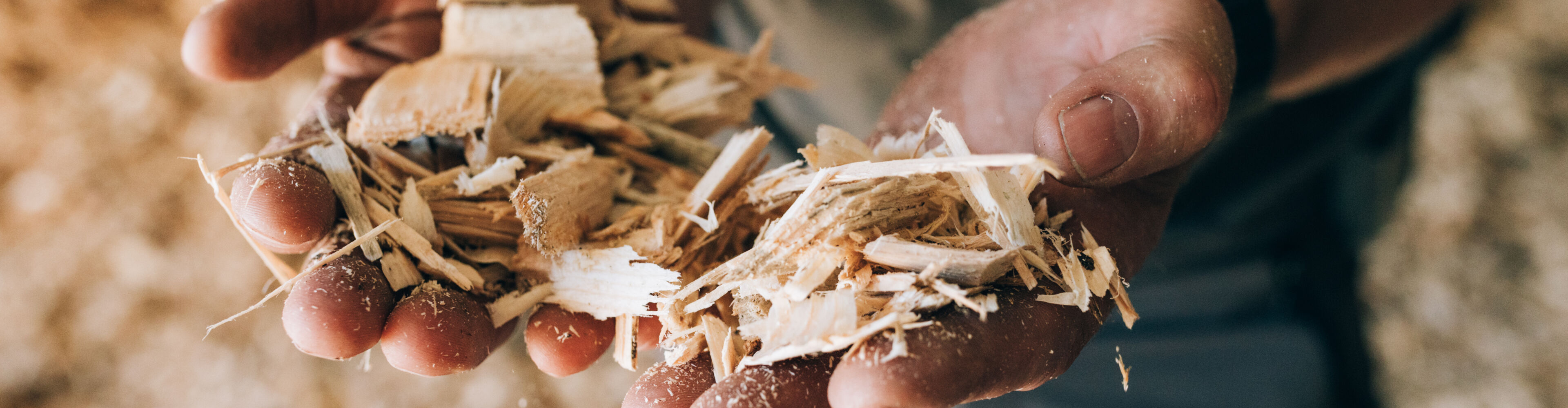
Franz Josef Schmutzer: For over 25 years we've been supplying Lech with environmentally friendly heat from biomass. The district heating network we operate now spans around 25 kilometers. Wood chips are delivered daily — exclusively sawmill residue wood, 95% of it from Vorarlberg. It's a cycle that makes sense not only ecologically but economically too.

Dominic Kummer
Holzschnipsel / Holzhackschnitzel

Dominic Kummer
Lech Zürs Tourismus: How does the system work in practice?
Schmutzer: In our heating plant, water is heated to 95°C and distributed through the network into the buildings. It supplies 400 customers — hotels, businesses, and private households — with heating and hot water. We have two hot water storage tanks with a volume of 107 cubic meters each, as well as two oil boilers for emergencies and an emergency generator. The latter also secure operation in the event of a power outage, such as a blackout — in that case we can continue running self-sufficiently.

Dominic Kummer
Biomasseheizwerk Zürs neben dem Zürsbach

Dominic Kummer
And what about emissions?
Schmutzer: We rely on state-of-the-art filter technology. The flue gases pass through an electrostatic filter, which significantly reduces particulate emissions. The resulting ash — around 100 tons annually — is disposed of at a special landfill. It's classified as special waste ash, but the quantity is small. Everything we do follows the principles of Turn to Zero — our operation is CO2-neutral.

Dominic Kummer
Franz Josef Schmutzer im Biomasseheizwerk Lech

Dominic Kummer
What does the heating plant mean economically for the region?
Schmutzer: It was founded in 1999 as a limited partnership — with VKW holding 26%, the municipality of Lech 25%, and local private individuals 49%. Back then we started by supplying 70 houses. Today, 98% of households (private households and businesses) in Lech Zürs are connected to the biomass district heating network and benefit from sustainable heat. The kilowatt-hour currently costs 10 cents, which is very competitive on average. Our goal is to guarantee stable prices going forward too — despite the general trend in energy prices.

Dominic Kummer
Im Innenleben des Heizwerks

Dominic Kummer
How many heating plants are there?
Schmutzer: A total of four biomass heating plants have been built and put into operation in Lech and Zürs since 1997. What all the plants in Lech and Zürs have in common is their particular location outside the village, in the natural landscape. There's no uniform design — each plant is tailored to its specific situation.
Oberlech (1997), Lech (1999), Zug (2007), Zürs (2010).
All four biomass heating plants use biomass as fuel and are otherwise no different in function from conventional heating plants. Hot water is centrally generated in a boiler.
“A total of four biomass heating plants have been built and put into operation in Lech and Zürs since 1997. What all the plants in Lech and Zürs have in common is their particular location outside the village, in the natural landscape. There's no uniform design — each plant is tailored to its specific situation.”
Franz Josef Schmutzer
Are there also energy efficiency measures within the buildings themselves?
Schmutzer: Yes, we work with what are known as heating curves. Buildings regulate their own heating circuits directly, and some use fresh water modules. Production happens on demand — meaning: when a guest takes a shower, heat is provided just in time. Our output capacity is 18 megawatts per hour — enough to ensure reliable supply even on peak days.

Dominic Kummer
Biomassemasseheizwerk Zürs

Dominic Kummer
Facts at a Glance
4 plants
in Lech Zürs
Oberlech (1997), Lech (1999), Zug (2007), Zürs (2010).
Savings
heating oil and CO2
approximately 7.75 million liters of heating oil saved annually and 24,000 tons of CO2 emissions avoided
Regional
Regional wood
95% sawmill residue wood from Vorarlberg
Lech aims to become a year-round destination. Does the heating plant play a role in that?
Schmutzer: Absolutely. We support that with a stable energy supply — whether it's a winter event, a cultural event, or the summer season. The new community center with the Kulturhaus Lech is also connected to the district heating system.
One last question: how is it ensured that everything runs smoothly?
Schmutzer: Our staff check all the units every day. In addition, a comprehensive inspection takes place every year. Individual system components such as boilers, buffers, or heat exchangers are regularly maintained. Our standard is: maximum supply reliability with a minimal ecological footprint.

Dominic Kummer
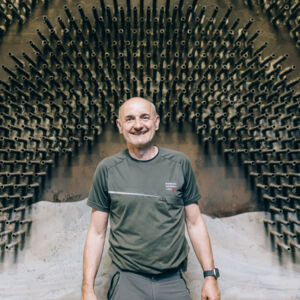
Franz Josef Schmutzer, Leiter des Biomasseheizwerk Lech

Dominic Kummer
We sincerely thank Franz Josef Schmutzer for the conversation and the fascinating insights.
The example of the biomass heating plants impressively shows how Lech Zürs takes responsibility for the environment and the future — thinking regionally, implemented sustainably.


Bruno Klomfar
Energie aus der Natur. Hackgut aus der Region.

Bruno Klomfar


Bruno Klomfar

Dominic Kummer
Biomassemasseheizwerk Zürs


Bruno Klomfar

Bruno Klomfar


Bruno Klomfar
Dominic Kummer